
Solutions Overview
From capture to governance, InfoConnect helps you streamline document workflows, automate processes, and deliver trusted information across your organisation—securely and at scale.

From capture to governance, InfoConnect helps you streamline document workflows, automate processes, and deliver trusted information across your organisation—securely and at scale.

From capture to governance, InfoConnect helps you streamline document workflows, automate processes, and deliver trusted information across your organisation—securely and at scale.

See how organisations streamline document workflows, strengthen governance, and improve operational efficiency with InfoConnect.
Practical insights on document management, workflow automation, e-Invoicing, governance, and industry trends—written for teams modernising enterprise operations.

Join live sessions and on-demand webinars to see real use cases, product walkthroughs, and best practices from InfoConnect experts and partners.

Build capability with structured training programs—designed for teams adopting document, workflow, and governance solutions at scale.
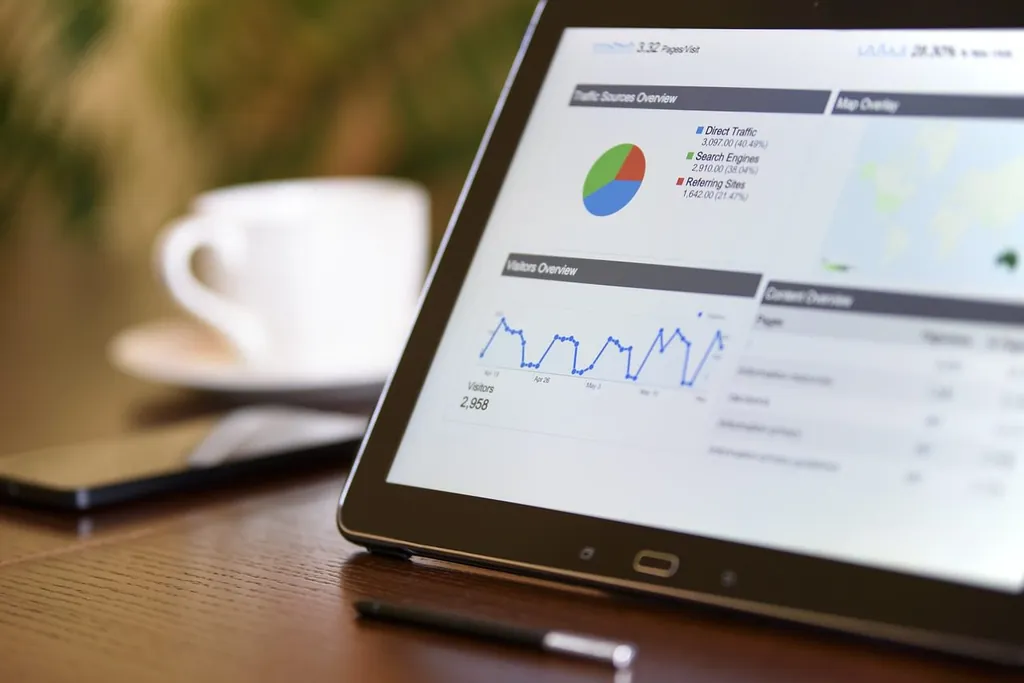
Download concise, practical guides to help you plan, evaluate, and implement enterprise information management and automation—backed by proven frameworks.
InfoConnect, established in 1994, is a Malaysia-based information management and automation solutions provider—helping organisations capture, manage, secure, and deliver critical information with greater efficiency and governance.

Thank you for your interest in InfoConnect as a platform for your employment opportunities. We are currently searching for talented individuals to join our ever growing family.
Tell us what you’re trying to improve—document management, workflow automation, e-Invoicing, analytics, or governance. Our team will respond within 1 business day.
 InfoConnect Marketing

Short answer
Malaysian law requires accounting, income tax and sales and service tax records to be kept for at least seven years, and each employee register entry for at least six. The clock does not always start on the document’s date: the Companies Act 2016 counts from the completed transaction, the Income Tax Act 1967 from the end of the year the income relates to. Your advisers confirm which periods apply to your company.
Key takeaways
Malaysian law sets retention periods record by record, not one rule for every file. These are the periods confirmed in the official text of each law or the regulator’s own guidance.
| Record | Minimum period and when it starts | Official source |
|---|---|---|
| Accounting and other records explaining the company’s transactions and financial position | 7 years after completion of the transactions or operations | Companies Act 2016, s. 245(3) |
| Members’ resolutions and minutes of members’ meetings | At least 7 years from the date of the resolution, meeting or decision | Companies Act 2016, s. 341(2) |
| Income tax records: books of account, invoices, vouchers, receipts | 7 years from the end of the year the income relates to | Income Tax Act 1967, s. 82(1) |
| The same records where the tax return was filed late | 7 years after the end of the year the return is furnished | Income Tax Act 1967, s. 82(1A) |
| Sales tax and service tax records | 7 years (the FAQs do not state the start date; ask your tax agent) | Customs sales tax FAQ and service tax FAQ |
| Register of employees | Each entry available for inspection for at least 6 years after it is recorded | Employment Act 1955, s. 61(2) |
| Anti-money laundering records of reporting institutions | At least 6 years after the transaction is completed or the business relationship ends | Bank Negara Malaysia |
| Personal data | No fixed period: no longer than the purpose it was processed for | Personal Data Protection Act 2010, s. 10 |
The Employment Act 1955 states that it applies to Peninsular Malaysia (later extended to Labuan), so employers in Sabah and Sarawak have their own rule to check.
The same sources extend the period in these situations.
Largely yes, with conditions. Section 82(7) of the Income Tax Act 1967 says electronic records must be kept in an electronically readable form, readily accessible and convertible into writing. The Customs SST FAQs allow soft or hard copy, in Bahasa Melayu or English, kept in Malaysia unless the Director General permits otherwise.
Two details catch companies out. First, section 82(7) also says records originally kept on paper and later converted to electronic form must be retained in their original form, so scanning tax records does not on its own allow the paper to be shredded. Ask your tax agent or LHDN before destroying originals. Second, section 82(8) requires records relating to a business in Malaysia to be kept and retained in Malaysia, which matters when deciding where cloud files are stored.
E-invoicing does not remove the duty either. LHDN’s e-Invoice Guideline (version 4.6, 7 December 2025) says validated e-invoices are stored in its database, and still reminds taxpayers to retain sufficient records and documentation for each transaction.
For personal data, the law leans towards deletion. Section 10 of the Personal Data Protection Act 2010 says personal data must not be kept longer than is necessary for the purpose it was processed for, and that all reasonable steps must be taken to destroy or permanently delete it once it is no longer required. Payroll files, staff records and customer identity copies all hold personal data, so keeping everything forever is not a safe default.
Companies usually settle this in a written retention schedule: each record type, its period, the event that starts the clock, who approves disposal, and a hold rule for audits, appeals and disputes. The periods in it are your company’s to set with your company secretary, tax agent or legal adviser.
We don’t set retention periods for our clients. What our Docuflo document management system (DMS) does is apply the periods your company has set, to every file, without anyone tracking dates by hand. We see retention as more than a compliance function: it helps you meet your retention obligations and also reduce storage costs by moving inactive documents to lower-cost secondary storage.
Meeting retention obligations. In Docuflo you define retention policies by document type, business function, regulatory requirement or record classification. Docuflo calculates each retention period automatically from the document date, the creation date or another trigger you define, and prevents the early deletion of records that must be kept for audit, legal or regulatory purposes. Its audit trail shows that your documented retention and disposal policies were followed.
Reducing storage costs. You can set an auto-archiving schedule for documents that are no longer used often but must still be kept. Docuflo moves them from primary storage to lower-cost secondary or archival storage, so less expensive, high-performance storage is needed for active documents. Storage tiers can follow access frequency, retention requirements and business value.
Keeping history within reach. Archived documents stay searchable in the DMS instead of disappearing from view when they move, so you can retrieve them for audits, investigations, disputes or customer requests. Their metadata, access permissions and audit history are kept across storage tiers, and a document can be restored to primary storage when needed, subject to the archive technology chosen.
In practice, it comes down to five steps:
Not always. Under the Companies Act 2016 the seven years start when the transaction or operation is completed. Under the Income Tax Act 1967 they start at the end of the year the income relates to, or at the end of the year a late return is filed, so the tax period often ends later.
Section 61 of the Employment Act 1955 requires each entry in the employee register to stay available for inspection for at least six years after it is recorded. LHDN also lists payroll records among the supporting documents a company should retain for income tax, so check with your tax agent whether the seven-year tax period applies.
Not automatically. Section 82(7) of the Income Tax Act 1967 says records first kept on paper and later converted to electronic form must also be retained in their original form. Ask your tax agent or LHDN before destroying scanned originals.
LHDN stores validated e-invoices in IRBM’s database, but its e-Invoice Guideline still reminds taxpayers to retain sufficient records and documentation for each transaction. The seven-year rule for tax records still applies to your own copies.
No. Docuflo applies retention periods; it does not choose them. Your company secretary, tax agent or legal adviser confirms the periods for your company, and Docuflo then calculates each file’s retention date from the document date, the creation date or another trigger you define.
We have provided information and content management solutions since 1994, from our head office in Petaling Jaya, Selangor. To talk about document management, workflow or data governance for your organisation, contact our sales team.
Email sales@infoconnect.com.my Call +603-7722 2001 Contact page
Existing customers can reach our support team at support@infoconnect.com.my.